About 47 minutes
Rational Horse-Shoeing — Themes and Context
Gardening
10,721 recorded words. 3 minutes difference from this book's estimate.
View Gutenberg source #22603
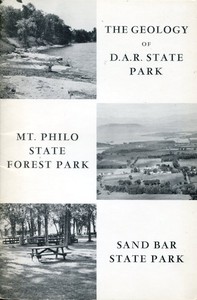
This digital edition of The Geology of D.A.R. State Park, Mt. Philo State Forest Park, Sand Bar State Park — A Closer Reading is described by source-level measurements including 9,916 words, 44 min estimated reading time, and 2 detected text sections.
The text analysis averages about 17.4 words per sentence, while the detected sections provide another way to judge how the source is divided.
Project Gutenberg metadata also associates the work with “Geology -- Vermont -- D.A.R. State Park,” connecting these edition facts with the source record’s subject description.
Explore this collection
These alternatives are selected using recorded categories and estimated reading time.
About 47 minutes
Gardening
10,721 recorded words. 3 minutes difference from this book's estimate.
View Gutenberg source #22603About 49 minutes
Gardening
11,206 recorded words. 5 minutes difference from this book's estimate.
View Gutenberg source #66012About 38 minutes
Gardening
8,617 recorded words. 6 minutes difference from this book's estimate.
View Gutenberg source #62838Search stored excerpts and compare books → Choose by your preferences →
Choices use stored catalog measurements. Estimates vary with reading speed. A shared category is a catalog label, not a claim that two books have the same argument or literary quality.
Search reads excerpt text stored with this catalog and links to its associated Gutenberg record. The connection is stored in the site database; this tool does not recheck that every excerpt is word-for-word identical to that external record. Excerpt search does not cover every chapter and does not verify historical publication dates.
Catalog snapshot checked: 2026-09-25. Coverage: 98 public books, 98 available source excerpts.
Read the complete public-domain text at its original source.
Read on Project GutenbergHarry W. Dodge’s 1969 pamphlet, published by the Vermont Geological Survey, opens with an unusual promise: that D.A.R. State Park “not only awakens the visitor’s curiosity about the past history of the Earth, but satisfies it.” The text is structured as a field guide, walking the reader through specific outcrops, beach exposures, and summit views. Dodge repeatedly uses the second person, telling visitors they can “read this story for yourselves” and that he will pass on “the tools of the trade.” The catalog subjects list only geology and parks, but the excerpts reveal a strong emphasis on glacial and post-glacial history, including lake sequences and marine incursions, as well as a pedagogical aim to train amateur observers.
Dodge’s prose consistently treats the reader as a fellow investigator. At D.A.R. State Park, he instructs: “The attitude of the rock layers can be seen on a walk down the ramp.” He defines technical terms like “dip” and “strike” in context, using the lake surface as a reference plane. The pamphlet includes figures (e.g., Fig. 2) that illustrate the dip of rocks toward the northwest. This hands-on approach extends to Mt. Philo, where Dodge points out that beach gravels occur “almost 500 feet above the present-day level of Lake Champlain,” inviting the visitor to infer that the mountain was once an island. The text does not merely describe; it equips the reader to make similar observations elsewhere.
Although the catalog subjects list only geology and parks, the excerpts devote substantial space to glacial geology and sea-level change. At Mt. Philo, Dodge describes “lake-beach gravels” and “marine beach gravel” (designated “bgm” in Fig. 12), which indicate that an arm of the Atlantic Ocean reached the Champlain Valley. He notes that the “complete story of the lake series is still not known” and cites two external references, including Stewart’s 1961 bulletin. The summary of geologic history traces events from “lower Cambrian time” through glaciation less than 70,000 years ago to the formation of present-day Lake Champlain. This temporal scope—spanning hundreds of millions of years—is not captured by the catalog’s narrow subject headings.
The pamphlet is organized by park, each with its own introduction and geological description. D.A.R. State Park begins at the beach, where “the rocks are best exposed.” Mt. Philo uses a panoramic view from the west overlook to discuss lake levels and glacial deposits. Sand Bar State Park is introduced as lying on “flat surface of Lamoille River delta.” Within each section, Dodge moves from observable features (rock layers, beach gravels) to broader interpretations (ancient seas, glacial lakes). He includes a “Summary of the Geologic History” that synthesizes the three parks into a regional narrative. This structure mirrors a field trip, guiding the visitor from specific outcrops to regional conclusions.
Readers approaching this pamphlet should bring a willingness to observe rock layers, beach deposits, and landscape forms firsthand. Dodge’s method is cumulative: each park adds a piece of the Champlain Valley’s story. The suggested readings, including Chapman (1937) and Stewart (1961), point to ongoing scientific debate, reminding us that the pamphlet is an invitation to inquiry, not a final word.
I found myself thinking about that old pamphlet on Vermont’s parks, how it made you feel the ground beneath your feet as a story. Fruits of the Hawaiian Islands — Story, Setting & Ideas lingers the same way — less a catalog and more a quiet invitation to notice what’s already growing around you, patiently.
A brief reflection can help important ideas stay with you longer.