About 47 minutes
Rational Horse-Shoeing — Themes and Context
Gardening
10,721 recorded words. 2 minutes difference from this book's estimate.
View Gutenberg source #22603
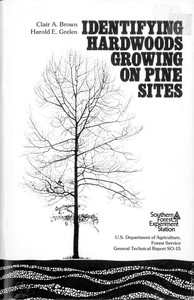
This digital edition of Identifying Hardwoods Growing on Pine Sites — Background and Themes is described by source-level measurements including 11,206 words, 49 min estimated reading time, and 3 detected text sections.
The text analysis averages about 15.2 words per sentence, while the detected sections provide another way to judge how the source is divided.
Project Gutenberg metadata also associates the work with “Hardwoods -- Southern States -- Identification,” connecting these edition facts with the source record’s subject description.
Explore this collection
These alternatives are selected using recorded categories and estimated reading time.
About 47 minutes
Gardening
10,721 recorded words. 2 minutes difference from this book's estimate.
View Gutenberg source #22603About 51 minutes
Gardening
11,575 recorded words. 2 minutes difference from this book's estimate.
View Gutenberg source #42559About 44 minutes
Gardening
9,916 recorded words. 5 minutes difference from this book's estimate.
View Gutenberg source #60989Search stored excerpts and compare books → Choose by your preferences →
Choices use stored catalog measurements. Estimates vary with reading speed. A shared category is a catalog label, not a claim that two books have the same argument or literary quality.
Search reads excerpt text stored with this catalog and links to its associated Gutenberg record. The connection is stored in the site database; this tool does not recheck that every excerpt is word-for-word identical to that external record. Excerpt search does not cover every chapter and does not verify historical publication dates.
Catalog snapshot checked: 2026-09-25. Coverage: 98 public books, 98 available source excerpts.
Read the complete public-domain text at its original source.
Read on Project GutenbergThe catalog entry for Identifying Hardwoods Growing on Pine Sites lists its subject as 'Hardwoods -- Southern States -- Identification' and places it in the Gardening category. However, the text itself is a U.S. Forest Service general technical report (SO-15) from 1977, authored by a botanist and a range scientist. Its stated audience is 'wood utilization researchers, especially those new to the South,' not home gardeners. The excerpts show a systematic, technical approach: a key to species, detailed morphological descriptions, and a table ranking hardwoods by volume on pine sites. This mismatch between catalog subject and actual purpose is worth examining.
The Gardening classification implies a readership interested in cultivation or ornamental use. Yet the report's opening paragraph cites a 1976 study estimating 49 billion cubic feet of 'small, low-quality hardwoods' on pine sites, calling them 'usually wasted' and destroyed during site preparation for pine regeneration. The authors aim to help researchers identify these species for potential economic utilization. No advice on planting, pruning, or landscaping appears. The key and descriptions assume familiarity with botanical terms such as 'stellate-pubescent,' 'samara,' and 'pistillate catkins.' A gardener seeking practical cultivation tips would find little here.
The report places unusual emphasis on winter identification, a feature not obvious from the catalog subject. The acknowledgments thank illustrator Bryan A. Jowers for 'excellent winter silhouettes,' and line drawings of bare branches accompany each species. Descriptions highlight bark, buds, and twig characteristics—features visible when leaves are absent. For example, the entry for Winged Elm notes 'corky ridges or wings on branches 3 years or older,' and Yellow-poplar buds are described as 'grayish green, turning red in winter, flat about 10 to 16 mm long.' This seasonal focus suggests the report was designed for fieldwork during dormant months, when hardwoods are harder to distinguish from pines.
The catalog subject 'Hardwoods -- Southern States' implies broad coverage, but the report explicitly covers only 26 species or varieties, 'including 16 oaks and hickories.' The selection is driven by economic volume on pine sites, not botanical diversity. Table 1 ranks species by percentage of total hardwood volume; oaks dominate. Missing are many common southern hardwoods like dogwood, redbud, or magnolia. The geographic scope is further narrowed: the authors thank collectors from Louisiana, Kentucky, New York, and North Carolina, but the report's data source (Staff, For. Resour. Res. Work Unit 1976) likely reflects the Lower Coastal Plain and Piedmont. Users in the Upper South or Gulf Coast may find some species absent or less relevant.
Readers should approach this work as a specialized field manual for forestry professionals, not a general gardening guide. Its value lies in precise, illustrated descriptions of economically important hardwoods, especially for winter identification. Those seeking a broader guide to southern trees will need supplementary sources. The catalog's Gardening subject may mislead, but the report itself delivers exactly what its title promises: a tool for identifying hardwoods on pine sites.
It’s funny how a 1977 forestry manual for researchers can feel like a quiet evening conversation about names and places. That same gentle ache of belonging—knowing exactly which tree you’re under—reminds me of the way Devonshire — Story, Setting & Ideas lingers, like a familiar hillside you keep returning to without quite knowing why.
A brief reflection can help important ideas stay with you longer.