About 35 minutes
The Geologic Setting of the John Day Country: Grant County, Oregon — Key Ideas to Explore
Gardening
8,028 recorded words. 3 minutes difference from this book's estimate.
View Gutenberg source #46969
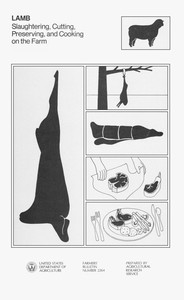
The catalog record for Lamb Slaughtering, Cutting, Preserving, and Cooking on the Farm — Inside the Classic provides practical reading context through 8,617 words, 38 min estimated reading time, and 2 detected text sections.
The text analysis averages about 15.1 words per sentence, while the detected sections provide another way to judge how the source is divided.
Project Gutenberg metadata also associates the work with “Meat cutting,” connecting these edition facts with the source record’s subject description.
Explore this collection
These alternatives are selected using recorded categories and estimated reading time.
About 35 minutes
Gardening
8,028 recorded words. 3 minutes difference from this book's estimate.
View Gutenberg source #46969About 34 minutes
Gardening
7,743 recorded words. 4 minutes difference from this book's estimate.
View Gutenberg source #46171About 32 minutes
Gardening
7,351 recorded words. 6 minutes difference from this book's estimate.
View Gutenberg source #50487Search stored excerpts and compare books → Choose by your preferences →
Choices use stored catalog measurements. Estimates vary with reading speed. A shared category is a catalog label, not a claim that two books have the same argument or literary quality.
Search reads excerpt text stored with this catalog and links to its associated Gutenberg record. The connection is stored in the site database; this tool does not recheck that every excerpt is word-for-word identical to that external record. Excerpt search does not cover every chapter and does not verify historical publication dates.
Catalog snapshot checked: 2026-09-25. Coverage: 98 public books, 98 available source excerpts.
Read the complete public-domain text at its original source.
Read on Project GutenbergThe bulletin opens with a legal warning: meat sold or traded must be federally inspected; home slaughter is only for personal or household use. This framing sets a practical, regulatory tone. The text then moves methodically from selecting a healthy animal—checking for fever, increased breathing, or diarrhea—through slaughter, chilling, and cutting. Photographs by Donald K. Rough and Terry K. O’Driscoll accompany each step, from splitting the carcass to removing the fell membrane. The structure follows the chronological sequence of farm processing, with each section building on the previous one.
The bulletin’s first major section, “Selection and Care of Animal Before Slaughter,” stresses health checks and proper handling. It advises against slaughtering unhealthy animals and recommends veterinary treatment. The slaughter section describes stunning, sticking, and skinning in precise steps. After chilling, the cutting section divides the carcass into four primal cuts: leg, loin, rib, and shoulder. Each cut is further broken down into retail cuts—chops, roasts, and stew meat. The text repeatedly notes the location of joints and bones, such as the “stifle joint” in the leg, and specifies saw cuts parallel to the backbone or 1 inch deep to avoid damaging the hipbone.
The cutting instructions emphasize measurement and technique. Loin chops are cut ¾ to 1 inch thick, perpendicular to the backbone. The fell membrane—a thin outer layer—is removed from chops before cooking because it becomes hard when fried, but left on roasts to reduce evaporation. The rib section is split differently: the backbone is removed by cutting along the ridge where ribs join it, then the breast is separated 2 inches from the rib eye. Shoulder chops include arm chops (cut parallel to the foreleg removal surface) and blade chops (cut between ribs through the blade bone). Boneless shoulder roasts require removing ribs and backbone before rolling.
The bulletin covers freezing and frozen storage, noting that properly wrapped lamb can be stored for several months. The meat cookery section provides basic methods: roasting, broiling, and frying, with attention to doneness. It advises against overcooking lamb, which can make it dry. The fell membrane is again mentioned—clean fell on roasts or stews does not affect flavor. A brief section on preserving lamb pelts describes salting and drying for use as rugs or leather. Throughout, the text assumes the reader has access to basic farm equipment: saws, knives, and a chilling area.
The bulletin opens with a clear statement of the Federal Meat Inspection Act: meat for sale must be inspected; home slaughter is only for the household, nonpaying guests, and employees. This legal boundary shapes the entire document. The authors—five specialists from USDA and universities—provide authoritative, step-by-step guidance. The photographs (over 60 figures) are integral, showing each cut and technique. The bulletin supersedes an earlier version (Farmers’ Bulletin 2152), indicating ongoing refinement of recommendations. The tone is instructional and neutral, avoiding any aesthetic or ethical commentary on slaughter.
Readers should note that the bulletin’s instructions are tied to specific equipment and conditions (e.g., a saw for splitting, a chilling room). The photographs are essential for visualizing cuts; the text alone may be insufficient. The legal restrictions on sale are a key takeaway: this guide is strictly for personal consumption. For those new to lamb processing, starting with the selection and care section is advisable, as animal health directly affects meat quality and safety.
I remember the old bulletin’s careful diagrams, how each cut honored the animal’s shape. It felt like reading a map of patience. That same quiet reverence for land and time lives in The Geology of D.A.R. State Park, Mt. Philo State Forest Park, Sand Bar State Park — A Closer Reading, where stone remembers slower work. Both whisper of usefulness and deep, unhurried care.
Use these questions to collect your thoughts before moving on.