About 32 minutes
The garden as a picture — Inside the Classic
Gardening
7,231 recorded words. 0 minutes difference from this book's estimate.
View Gutenberg source #69479
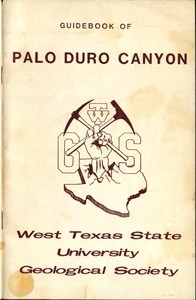
Before opening Guidebook of Palo Duro Canyon — Reading Notes, the edition data offers a quick orientation: 7,351 words, 32 min estimated reading time, and 1 detected text section.
The text analysis averages about 19.0 words per sentence, while the detected sections provide another way to judge how the source is divided.
Project Gutenberg metadata also associates the work with “Geology -- Texas -- Palo Duro Canyon,” connecting these edition facts with the source record’s subject description.
Explore this collection
These alternatives are selected using recorded categories and estimated reading time.
About 32 minutes
Gardening
7,231 recorded words. 0 minutes difference from this book's estimate.
View Gutenberg source #69479About 32 minutes
Gardening
7,175 recorded words. 0 minutes difference from this book's estimate.
View Gutenberg source #76015About 31 minutes
Gardening
7,106 recorded words. 1 minutes difference from this book's estimate.
View Gutenberg source #19038Search stored excerpts and compare books → Choose by your preferences →
Choices use stored catalog measurements. Estimates vary with reading speed. A shared category is a catalog label, not a claim that two books have the same argument or literary quality.
Search reads excerpt text stored with this catalog and links to its associated Gutenberg record. The connection is stored in the site database; this tool does not recheck that every excerpt is word-for-word identical to that external record. Excerpt search does not cover every chapter and does not verify historical publication dates.
Catalog snapshot checked: 2026-09-25. Coverage: 98 public books, 98 available source excerpts.
Read the complete public-domain text at its original source.
Read on Project GutenbergThe Guidebook of Palo Duro Canyon opens not with the canyon itself but with a detailed description of the Department of Geosciences at West Texas State University, listing faculty interests and thesis topics. This institutional framing establishes the guidebook as a student-led project, grounded in academic geology. The foreword confirms that the guidebook is sponsored by the WTSU Geological Society, organized in 1958, and credits earlier contributors. The text then moves through ecology, human history, geologic history, and paleontology in sequence, each section building on the last.
The guidebook is organized as a chronological journey, beginning with the present-day ecology and then moving backward through human history, geologic history, and paleontology. This structure mirrors a descent into the canyon itself: the reader starts at the rim (ecology and human use) and descends into deeper time (geologic formations and fossils). The text signals these transitions with clear headings and brief introductory sentences. For example, the ecology section describes current plant and animal life, while the human history section traces habitation from prehistoric peoples to modern ranchers. The geologic history then explains the rock layers visible in the canyon walls, and the paleontology section reconstructs the ancient environments that left fossils in those layers.
Throughout the guidebook, water appears as a shaping force and a scarce resource. The ecology section notes that the canyon's vegetation depends on intermittent streams and springs. The human history section mentions that early inhabitants relied on the canyon's water sources. In the geologic history, water is described as cutting the canyon itself: the Prairie Dog Town Fork of the Red River is the primary erosional agent. The paleontology section contrasts ancient tropical environments with “sluggish rivers” and lakes to the drier conditions that led to the disappearance of swamps. This recurring image of water—both as a creative and destructive force—ties the sections together.
The guidebook frequently shifts between describing the modern canyon and reconstructing its prehistoric past. For instance, the paleontology section notes that “Araucarioxylon” trees from the Triassic can still be found as petrified wood in the canyon today. This direct link between ancient flora and present-day fossils helps the reader visualize the continuity of the landscape. Similarly, the description of Pliocene mammals—such as mastodons, saber-tooth cats, and giant sloths—is followed by a note that some of these animals lived in the Panhandle “a mere 10,000 years ago,” bridging deep time and recent prehistory. These transitions emphasize that the canyon is a palimpsest of different eras.
The guidebook includes figures, such as a geologic map and a mural of Pliocene mammals, which are referenced in the text but not reproduced in the excerpts. The text describes these illustrations in detail, listing the species depicted and their characteristics. For example, Figure 8 lists 15 Pliocene mammals with brief descriptions like “shovel-tusked mastodon” and “burrowing horned rodent.” This reliance on visual aids suggests that the guidebook was designed for field use, where readers could consult the illustrations while observing the canyon. The text also includes advertisements for local businesses, such as a rock shop and a drilling company, which ground the guidebook in the local economy of the 1970s.
Readers approaching this guidebook should expect a concise, field-oriented text that moves systematically from surface to depth. The institutional context—a student geological society—shapes its tone and purpose: it is both an educational tool and a practical companion for visitors. The guidebook’s strength lies in its ability to connect the visible landscape to invisible deep time, using fossils and rock layers as evidence. For a fuller understanding, consider supplementing this text with a modern geological map of the canyon.
There’s something humbling in how the WTSU guidebook layers canyon time—rock, bone, root, all resting together. It made me think of an old copy of Culinary Herbs: Their Cultivation Harvesting Curing and Uses, whose patient pages smell of pressed sage and sun. Both feel less like instructions and more like quiet companions, holding close what the years have gently set down. Culinary Herbs: Their Cultivation Harvesting Curing and Uses — Context and Discussion stays with me the same way.
Capture what you thought, learned, and would like to remember.