About 35 minutes
The Geologic Setting of the John Day Country: Grant County, Oregon — Key Ideas to Explore
Gardening
8,028 recorded words. 1 minutes difference from this book's estimate.
View Gutenberg source #46969
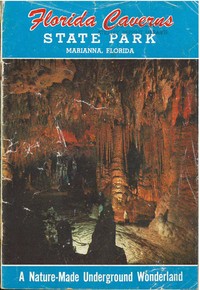
For Florida Caverns State Park Marianna, Florida — Text and Context, the stored edition analysis reports 7,743 words, 34 min estimated reading time, and 1 detected text section.
The text analysis averages about 22.8 words per sentence, while the detected sections provide another way to judge how the source is divided.
Project Gutenberg metadata also associates the work with “Caves -- Florida,” connecting these edition facts with the source record’s subject description.
Explore this collection
These alternatives are selected using recorded categories and estimated reading time.
About 35 minutes
Gardening
8,028 recorded words. 1 minutes difference from this book's estimate.
View Gutenberg source #46969About 32 minutes
Gardening
7,351 recorded words. 2 minutes difference from this book's estimate.
View Gutenberg source #50487About 32 minutes
Gardening
7,231 recorded words. 2 minutes difference from this book's estimate.
View Gutenberg source #69479Search stored excerpts and compare books → Choose by your preferences →
Choices use stored catalog measurements. Estimates vary with reading speed. A shared category is a catalog label, not a claim that two books have the same argument or literary quality.
Search reads excerpt text stored with this catalog and links to its associated Gutenberg record. The connection is stored in the site database; this tool does not recheck that every excerpt is word-for-word identical to that external record. Excerpt search does not cover every chapter and does not verify historical publication dates.
Catalog snapshot checked: 2026-09-25. Coverage: 98 public books, 98 available source excerpts.
Read the complete public-domain text at its original source.
Read on Project GutenbergRobert O. Vernon's guide to Florida Caverns State Park opens not with a cave entrance but with a stone administration building, built by hand from native limestone and topped with a hand-riven cypress shake roof. This choice of starting point establishes a key structural pattern: the booklet moves deliberately from the man-made to the natural, from the surface to the subterranean. The building's weathered walls and hand-hewn timbers mirror the caverns' own stalactites and stalagmites, suggesting that human craft and geological processes are parallel acts of construction.
Charles Cottingham's poem, printed near the beginning, does more than decorate the page. Its stanzas describe stalactites and stalagmites as 'fluted columns tall' and 'pendants from the dome,' directly echoing the language Vernon later uses for cave formations. The poem also introduces a theological lens—'The Architect within whose mind / The wonders of the sea'—that Vernon quietly reinforces when he calls Florida 'a child of the sea.' This poetic frame gives the geological explanations a sense of wonder before the science begins.
Vernon shifts repeatedly between the immense and the minute. He describes Florida's limestone as formed from 'the hard shells of animals' that accumulated on ancient sea bottoms, then zooms in to the 'grape-like clusters' that form when water evaporates slowly from cave ceilings. This back-and-forth movement—from ocean basins to individual fossils, from cave chambers to tiny mineral deposits—structures the reader's attention. The guide never stays at one scale for long, mirroring the way a visitor's eye might travel from a massive column to the delicate drapery on its surface.
The booklet repeatedly juxtaposes the world above ground with the world below. The golf course, 'laid out after the design of the famous St. Andrews Golf Course of Scotland,' sits atop a limestone landscape riddled with caves. A clear spring that 'in reality is a subterranean river' rises out of the rock and flows through the park. Even the Civil War anecdote—women and children taking refuge in the caverns during a battle—uses the caves as a hidden counterpoint to the surface conflict. These contrasts give the guide a layered geography, where every surface feature hints at a hidden counterpart.
Vernon's text functions as a verbal tour route. He describes what visitors 'notice' as they explore 'the well-lighted trails and passageways,' pointing out icicle-like formations, columns, and imbedded sea shells. The closing sections shift to practical travel information—airline service, bus schedules, hotels—as if the booklet itself is leading the reader from the cave's interior back to the surface and onward to the next destination. This structure turns reading into a kind of movement, with the prose guiding the eye and the imagination through the same sequence a tourist would follow.
Vernon's guide is best read as a layered itinerary, one that moves from poem to geology, from surface to cave, and from natural wonder to practical logistics. The recurring images of stone—whether hand-hewn, weathered, or formed drop by drop—tie these layers together. Readers who follow the booklet's sequence will find that its structure, like the caverns themselves, rewards attention to the connections between parts.
There’s something restful about how Vernon lets the rock and the history sit side by side, neither hurrying the other. I found myself thinking of that slow patience again while wandering through Coffee and chicory — Themes and Context, where warmth and bitter simplicity share the same quiet page. Both feel like places you revisit without quite meaning to.
A brief reflection can help important ideas stay with you longer.