About 140 minutes
The Mule: A Treatise on the Breeding, Training, and Uses to Which He May Be Put — Themes and Context
Gardening
32,039 recorded words. 2 minutes difference from this book's estimate.
View Gutenberg source #10878
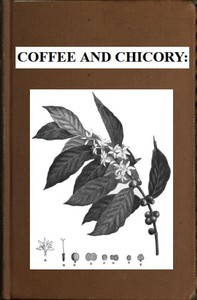
The source record for Coffee and chicory — Themes and Context measures this digital text at 32,465 words, 2 hr 22 min estimated reading time, and 4 detected text sections.
The text analysis averages about 24.8 words per sentence, while the detected sections provide another way to judge how the source is divided.
Project Gutenberg metadata also associates the work with “Food adulteration and inspection,” connecting these edition facts with the source record’s subject description.
Explore this collection
These alternatives are selected using recorded categories and estimated reading time.
About 140 minutes
Gardening
32,039 recorded words. 2 minutes difference from this book's estimate.
View Gutenberg source #10878About 136 minutes
Gardening
31,215 recorded words. 6 minutes difference from this book's estimate.
View Gutenberg source #21022About 151 minutes
Gardening
34,571 recorded words. 9 minutes difference from this book's estimate.
View Gutenberg source #35439Search stored excerpts and compare books → Choose by your preferences →
Choices use stored catalog measurements. Estimates vary with reading speed. A shared category is a catalog label, not a claim that two books have the same argument or literary quality.
Search reads excerpt text stored with this catalog and links to its associated Gutenberg record. The connection is stored in the site database; this tool does not recheck that every excerpt is word-for-word identical to that external record. Excerpt search does not cover every chapter and does not verify historical publication dates.
Catalog snapshot checked: 2026-09-25. Coverage: 98 public books, 98 available source excerpts.
Read the complete public-domain text at its original source.
Read on Project GutenbergP. L. Simmonds opens his 1864 handbook by stating that a practical essay on coffee culture 'has long been wanted,' positioning the work as a successor to out-of-print references like Porter's 'Tropical Agriculturist.' The preface emphasizes a 'popular form' while promising 'correct information on most points' and 'fullest descriptive and statistical details.' Despite the catalog subject 'Gardening,' the excerpts show the book is equally concerned with chemical composition, market preparation, and adulteration—a blend of agricultural science and commercial pragmatism.
The excerpt on planting methods reveals an exacting attention to detail that goes beyond general gardening advice. Simmonds warns that a tap root not placed 'perpendicularly in the hole' leads to pale, mottled leaves and premature 'boll, or empty in husk' fruit. He attributes such failures to laborers 'carelessly doubling up the tap as they place the plant in the earth.' The text also weighs the merits of seedlings versus stumps: stumps are safer in dry weather, but plants with earth balls are 'the most economical, as being almost an assurance against failure.' This economic calculus—where time, risk, and yield are constantly balanced—pervades the instructions.
Simmonds addresses a debated point: 'much contention has existed on the merits of shade and no shade.' He states flatly that 'shade is not required, and the plants are best without it,' yet acknowledges that nurseries are often 'subject to shade' because they must be formed before land is cleared, protected by a 'belt of forest from the fire of the clearing.' This practical concession shows the author adapting ideal methods to real-world constraints. The nursery beds are prepared with 'hoes and picks about two spits deep,' and seeds are 'most lightly covered with a little sifted mould' or pressed in with the finger. The text also recommends lining out small seedlings from beneath coffee-bushes, claiming these make 'by far the best and hardiest plants.'
Although the excerpts focus on cultivation, the book's full title includes 'simple tests for detecting adulteration,' and the preface credits Dr. Hassall's work on 'Food and its Adulterations' for microscopic illustrations. The catalog subject 'Food adulteration and inspection' is thus central, not peripheral. Simmonds addresses both producer and consumer, offering practical hints that bridge farm and table. The section on chicory—a common coffee adulterant—is included as a separate part of the volume. This dual focus distinguishes the book from a pure gardening manual, aligning it instead with 19th-century concerns about food purity and commercial transparency.
Readers approaching this text should expect a hybrid work: part agricultural treatise, part commercial handbook, and part consumer guide. The catalog subject 'Gardening' captures only one dimension; the book's value lies in its integration of cultivation details with economic reasoning and adulteration detection. Simmonds writes for a practical audience—planters, merchants, and informed consumers—and his evidence-based advice rewards careful reading, especially where he notes exceptions to general rules.
Beneath that 1864 handbook’s careful chemistry, I always sensed a patient affection for the soil itself—the same quiet devotion in Lessons on Soil — Story, Setting & Ideas, where ground becomes memory. Both whisper that growing things, and knowing them, is finally a kind of tenderness. It feels like an old agreement between neighbors. That is all.
Capture what you thought, learned, and would like to remember.