About 153 minutes
Studies in the Art of Rat-catching — Key Ideas to Explore
Gardening
35,050 recorded words. 2 minutes difference from this book's estimate.
View Gutenberg source #41133
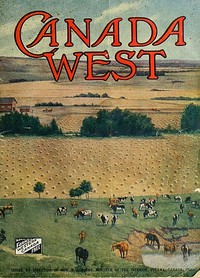
Canada West — Themes and Context can be approached with a clearer sense of reading commitment from its source measurements: 34,571 words, 2 hr 31 min estimated reading time, and 6 detected text sections.
The text analysis averages about 16.5 words per sentence, while the detected sections provide another way to judge how the source is divided.
Project Gutenberg metadata also associates the work with “Agriculture -- Prairie Provinces,” connecting these edition facts with the source record’s subject description.
Explore this collection
These alternatives are selected using recorded categories and estimated reading time.
About 153 minutes
Gardening
35,050 recorded words. 2 minutes difference from this book's estimate.
View Gutenberg source #41133About 158 minutes
Gardening
36,167 recorded words. 7 minutes difference from this book's estimate.
View Gutenberg source #21414About 142 minutes
Gardening
32,465 recorded words. 9 minutes difference from this book's estimate.
View Gutenberg source #57340Search stored excerpts and compare books → Choose by your preferences →
Choices use stored catalog measurements. Estimates vary with reading speed. A shared category is a catalog label, not a claim that two books have the same argument or literary quality.
Search reads excerpt text stored with this catalog and links to its associated Gutenberg record. The connection is stored in the site database; this tool does not recheck that every excerpt is word-for-word identical to that external record. Excerpt search does not cover every chapter and does not verify historical publication dates.
Catalog snapshot checked: 2026-09-25. Coverage: 98 public books, 98 available source excerpts.
Read the complete public-domain text at its original source.
Read on Project GutenbergIssued by the Canadian Department of the Interior in 1914, Canada West is a promotional handbook aimed at prospective settlers. Its opening pages immediately establish a bureaucratic tone: land regulations are laid out in numbered clauses, and a diagram of a township shows how sections and quarter-sections are arranged. The text speaks of “free homesteads” and “crown deeds,” using precise legal language that frames settlement as a formal transaction. Yet alongside this official voice, the booklet deploys sweeping geographical claims—Alberta is “twice the size of Great Britain and Ireland”—and boosterish assertions about climate and soil. The result is a document that oscillates between administrative instruction and persuasive rhetoric, revealing the dual purpose of the publication: to inform and to recruit.
The booklet’s first substantive section, “Land Regulations in Canada,” reads like a legal code. It specifies who is eligible: “the sole head of a family or any male eighteen years of age or over, who is a British subject or who declares his intention to become a British subject.” Widows with minor children are also eligible. The text describes the process of “making entry” at a Dominion Lands Office, paying a $10 fee, and receiving a certificate that grants “full possession” as long as homestead duties are performed. Residence requirements are spelled out: six months per year for three years in a “habitable house.” Improvement duties require breaking thirty acres, with twenty cropped. The language is impersonal and procedural, yet it constructs a narrative of opportunity through clear steps and conditions. The repetition of “must” and “required” underscores that this opportunity is conditional, contingent on the settler’s compliance.
Throughout Canada West, statistical tables serve as rhetorical devices. A table titled “Population and Live Stock” lists figures for 1909 through 1913, showing increases in horses, milch cows, other cattle, and swine. The population of Saskatchewan is given as 492,432 in 1911, with an estimate for 1913. These numbers are presented without commentary, as if self-evident proof of growth. Elsewhere, the text boasts that Alberta has “less than 500,000 people” on an area “twice the size of Great Britain and Ireland.” The juxtaposition of vast land and sparse population implies room for expansion. The booklet also notes that “less than 3 million acres” of Alberta’s arable land is under cultivation, leaving 97 million acres untouched. Such figures are not neutral data; they are arguments for migration, designed to convince readers that the West is underpopulated and underdeveloped, ripe for exploitation.
The descriptions of Manitoba, Saskatchewan, Alberta, and British Columbia blend factual observation with promotional flourish. Alberta is characterized as “a vast plateau from 2,000 to 3,000 feet above sea-level, hung by its western edge on the foothills of the Rocky Mountains.” The text notes that “absolutely level plains form no great proportion of the surface,” instead emphasizing undulating terrain “diversified by forest, stream, hill and open country.” Southern Alberta is described as “open and rolling, and devoid of timber except along the streams,” with a climate that allows stock to “pasture in the open air during winter, grazing on the nutritive sun-dried grasses.” The absence of timber is offset by coal deposits. These passages use sensory details—grasses, water, shelter—to create an appealing picture, while also acknowledging limitations (lack of timber) and immediately providing compensation (coal). The geography is never neutral; it is always framed as advantageous.
The booklet’s promotional voice is most evident in assertions like “Wheat and oats are reliable crops. Rainfall is certain. Mixed farming is highly successful.” Such declarative sentences leave no room for doubt. Yet the text also includes more measured statements: “Northern and western portions of Central Alberta have some 'brush' land with soil equal to that of the open prairie. The cost of clearing is slight.” The word “some” introduces a note of qualification, and the mention of clearing costs acknowledges labor. Similarly, the claim that “water is plentiful and easily secured” is followed by a description of “beautiful lakes, fringed with forest and abounding in whitefish.” The boosterism is tempered by practical details, but the overall tone remains optimistic. The booklet never mentions crop failure, harsh winters, or isolation—omissions that reveal its purpose as recruitment literature rather than objective survey.
Canada West is best read as a period piece of government-sponsored propaganda, its language and data shaped by the goal of attracting settlers. Readers interested in the rhetoric of expansion, the history of Canadian land policy, or the intersection of bureaucracy and boosterism will find it a rich primary source. The excerpts provide a window into how the state represented the West in 1914—as a land of opportunity, order, and abundance, where every acre was surveyed and every regulation spelled out.
There’s something tender in that old government hand, urging strangers toward a future of wheat and wind. Reading Canada West, I kept thinking how every hopeful claim is really a kind of ache. The same ache lives in The Almond in California — Background and Themes—that quiet faith that the land will keep its promise, even when the rain forgets to come.
Your answers remain private and are stored only in this browser.