About 31 minutes
English walnuts — Key Ideas to Explore
Gardening
7,106 recorded words. 0 minutes difference from this book's estimate.
View Gutenberg source #19038
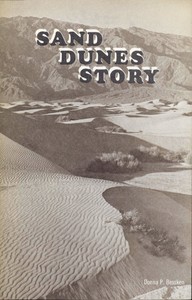
The source record for Sand dunes story — Inside the Classic measures this digital text at 7,025 words, 31 min estimated reading time, and 1 detected text section.
The text analysis averages about 17.0 words per sentence, while the detected sections provide another way to judge how the source is divided.
Project Gutenberg metadata also associates the work with “Death Valley National Park (Calif. and Nev.) -- Guidebooks,” connecting these edition facts with the source record’s subject description.
Explore this collection
These alternatives are selected using recorded categories and estimated reading time.
About 31 minutes
Gardening
7,106 recorded words. 0 minutes difference from this book's estimate.
View Gutenberg source #19038About 32 minutes
Gardening
7,351 recorded words. 1 minutes difference from this book's estimate.
View Gutenberg source #50487About 32 minutes
Gardening
7,231 recorded words. 1 minutes difference from this book's estimate.
View Gutenberg source #69479Search stored excerpts and compare books → Choose by your preferences →
Choices use stored catalog measurements. Estimates vary with reading speed. A shared category is a catalog label, not a claim that two books have the same argument or literary quality.
Search reads excerpt text stored with this catalog and links to its associated Gutenberg record. The connection is stored in the site database; this tool does not recheck that every excerpt is word-for-word identical to that external record. Excerpt search does not cover every chapter and does not verify historical publication dates.
Catalog snapshot checked: 2026-09-25. Coverage: 98 public books, 98 available source excerpts.
Read the complete public-domain text at its original source.
Read on Project GutenbergThis booklet opens not with a preface but with a map: a hand-drawn diagram of the Death Valley dunes area, labeling landmarks such as Stove Pipe Wells, Devil's Cornfield, and Mosaic Canyon. The map sets the tone for a guide that is both practical and observational. The author immediately addresses the reader in second person, asking “What do YOU see as YOU look across the dunes?” and framing the dunes not as a static landscape but as a place of personal interpretation. The text warns of hidden thorns, deceptive distances, and the need for water, grounding the reader in the physical realities of the desert. The booklet is explicitly designed to be flipped through non-sequentially, matching the reader's own discoveries.
The booklet explains dune formation through three requirements: wind, sand, and a place for sand to collect. It details how seasonal wind patterns—northerly in winter, southerly in summer—interact with landforms to create eddies that deposit sand in the same area repeatedly. This is not a generic geology lesson; the text ties the process directly to the Death Valley location, noting that crosswinds and eddies “result in decreased wind speed and cause the sand to drop out.” The explanation is concise and avoids jargon, making it accessible to a visitor standing on the dunes. The author does not claim the dunes are unique, but rather states they “reflect variations in the sand supply and respond to particular wind patterns following the same basic, natural principles.” This humility is characteristic of the guide's tone.
A substantial portion of the booklet is devoted to animal tracks, presented with diagrams and measurements. The text distinguishes between the tracks of coyotes and kit foxes, noting that coyote tracks are “difficult to distinguish from those left by domestic dogs.” It describes the gait of kangaroo rats, the drag marks of sidewinders, and the “tiny bulldozer” tracks of beetles. The author encourages readers to follow tracks and imagine the animal's movement: “How many feet does it have? Are the feet side by side as though jumping… or do they alternate?” This investigative approach turns the dunes into a natural detective scene. The text also notes that most dune activity is nocturnal, so morning walks reveal the “secrets of the previous night.”
The booklet repeatedly emphasizes self-reliance and sensory engagement. There is no guided trail, so the author advises looking behind to fix a mountain landmark. Readers are told to carry water, watch for thorns, and consider carrying shoes if the sand is too hot. The text suggests picking up sand to compare texture and temperature, and to “be alert for little things—notice plants, sand ripples, animal burrows and tracks.” The closing poem, “Sand soft fine / Easy to sift and mold,” reinforces the tactile, exploratory spirit. The booklet ends with a National Park Service contact, reminding readers that this is a public-land resource, not a commercial product.
This booklet is best used as a field companion, not a armchair read. Its value lies in the specific details—the track diagrams, the wind patterns, the warning about hidden thorns—that equip a visitor to engage directly with the dunes. The text does not attempt to cover all of Death Valley, but focuses narrowly on one dune system, making it a model of focused natural-history interpretation. Readers interested in broader desert ecology may need supplementary sources, but for a self-guided walk, this guide is remarkably complete.
Walking those dunes, I kept noticing how each ripple was a record—of wind, of some small creature's passing. It made me think of reading The Great Horse; or, The War Horse from the time of the Roman Invasion till its development into the Shire Horse. — Background and Themes—not for the battles, but for how a stride or a hoofprint could quietly tell an entire history of the land beneath it.
Create a short personal record of your experience with this book.