About 95 minutes
Fruits of the Hawaiian Islands — Story, Setting & Ideas
Gardening
21,800 recorded words. 0 minutes difference from this book's estimate.
View Gutenberg source #43581
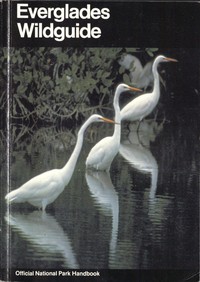
The source record for Everglades Wildguide Handbook 143 — Reading Notes measures this digital text at 21,680 words, 1 hr 35 min estimated reading time, and 5 detected text sections.
The text analysis averages about 24.7 words per sentence, while the detected sections provide another way to judge how the source is divided.
Project Gutenberg metadata also associates the work with “Natural history -- Florida -- Everglades,” connecting these edition facts with the source record’s subject description.
Explore this collection
These alternatives are selected using recorded categories and estimated reading time.
About 95 minutes
Gardening
21,800 recorded words. 0 minutes difference from this book's estimate.
View Gutenberg source #43581About 97 minutes
Gardening
22,250 recorded words. 2 minutes difference from this book's estimate.
View Gutenberg source #3452About 99 minutes
Gardening
22,603 recorded words. 4 minutes difference from this book's estimate.
View Gutenberg source #33679Search stored excerpts and compare books → Choose by your preferences →
Choices use stored catalog measurements. Estimates vary with reading speed. A shared category is a catalog label, not a claim that two books have the same argument or literary quality.
Search reads excerpt text stored with this catalog and links to its associated Gutenberg record. The connection is stored in the site database; this tool does not recheck that every excerpt is word-for-word identical to that external record. Excerpt search does not cover every chapter and does not verify historical publication dates.
Catalog snapshot checked: 2026-09-25. Coverage: 98 public books, 98 available source excerpts.
Read the complete public-domain text at its original source.
Read on Project GutenbergThe preface of this handbook immediately establishes the Everglades as a "shimmering" landscape where water "creeps silently" across Florida, a "lazy river" that eases through tall grasses and shadowy forests. Jean Craighead George, known for her children's literature, here writes a natural history guide that treats the park as a series of interconnected communities—pine rockland, tree-island glades, mangrove swamp—each with distinct inhabitants. The book's structure, moving from broad overview to specific habitats and then to taxonomic checklists, mirrors the way a visitor might experience the park: first glimpsing the watery expanse, then focusing on particular plants and animals.
The Everglades is not a swamp but a shallow, slow-moving river. George emphasizes its subtlety: water depth is measured in inches, not feet. This "sheet flow" creates a landscape where elevation changes of a few feet determine entire ecosystems. The book's first chapters—Pine Rockland, Tree-Island Glades, Mangrove Swamp—are organized by these subtle topographic zones. Each community is defined by its relationship to water and fire, two forces that shape the park. The pine rockland, for instance, depends on periodic fires to clear underbrush and allow seeds to germinate. George's descriptions are precise: she notes which plants grow on the higher, drier ground and which thrive in the wetter sloughs. This attention to microhabitats prepares the reader to see the park not as a uniform marsh but as a mosaic of distinct living neighborhoods.
Among the most memorable passages in the excerpts is the description of the anhinga, or "snake bird," which swims submerged with only its neck above water. After fishing, it must perch with wings spread to dry, lacking the oil that waterproofs ducks. George captures this behavior with specificity: the bird "struggles to the branch" and "hangs its feathers out to dry." This image recurs in the book as a motif for adaptation—each creature has evolved peculiar solutions to the challenges of this watery world. The snail kite, another featured bird, flies low over marshes searching for its sole food, the Pomacea snail. Its hooked beak is a tool for extracting snails from shells. These detailed portraits, accompanied by Betty Fraser's illustrations, turn the guide into a field companion that rewards patient observation.
George devotes considerable attention to the long-legged wading birds of the heron family, noting that they are "so numerous and so much alike" that a field guide is needed for identification. Yet she distinguishes them by their feeding methods: the reddish egret "lurches through the shallows, dashing to left and right as if drunk," a clownish contrast to the stately great blue heron. The book's approach is comparative—it groups species by behavior rather than taxonomy. This section also touches on conservation: the bald eagle, "sadly, is no longer common in North America," and the reddish egret is a "clownish survivor of the old plume-hunting days." These asides ground the natural history in human impact, reminding readers that the park is a refuge for species pushed to the edge elsewhere.
The book's later chapters shift from habitats to specific phenomena: alligator holes, which concentrate wildlife during dry periods, and air plants (epiphytes) that grow on trees without soil. George explains how alligators maintain these holes by clearing vegetation, creating oases for fish, turtles, and birds. The section on air plants describes their adaptations for capturing water and nutrients from the air. These chapters demonstrate the interconnectedness of the ecosystem—how a reptile's behavior shapes the landscape for other species. The appendices include checklists of mammals, birds, reptiles, amphibians, and trees, as well as a glossary. For a first-time reader, these lists serve as a reference to be consulted before or after a visit, reinforcing the book's dual role as both a narrative and a practical guide.
This handbook is best read not as a continuous narrative but as a layered reference: skim the habitat chapters for an overview, then return to the species accounts when you encounter a particular bird or plant. George's writing rewards slow reading—her observations of behavior, like the anhinga's drying ritual or the reddish egret's drunken lurch, stick in the mind and transform a walk through the park into a search for these small dramas. The checklists at the back are not afterthoughts but tools for active engagement.
I finished the Everglades book and kept thinking about how quietly it watches things—just noting the way a heron stands, the patience of it all. It reminded me of that old book about horses, The Great Horse; or, The War Horse from the time of the Roman Invasion till its development into the Shire Horse. — Background and Themes, where animal lives are stitched into human history, no drama, just long steady presence. That kind of lingering stays with you.
A brief reflection can help important ideas stay with you longer.