About 31 minutes
English walnuts — Key Ideas to Explore
Gardening
7,106 recorded words. 9 minutes difference from this book's estimate.
View Gutenberg source #19038
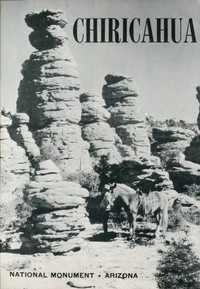
For Chiricahua National Monument (1958) — Reading Notes, the stored edition analysis reports 4,951 words, 22 min estimated reading time, and 1 detected text section.
The text analysis averages about 21.7 words per sentence, while the detected sections provide another way to judge how the source is divided.
Project Gutenberg metadata also associates the work with “Chiricahua National Monument (Ariz.),” connecting these edition facts with the source record’s subject description.
Explore this collection
These alternatives are selected using recorded categories and estimated reading time.
About 31 minutes
Gardening
7,106 recorded words. 9 minutes difference from this book's estimate.
View Gutenberg source #19038About 31 minutes
Gardening
7,025 recorded words. 9 minutes difference from this book's estimate.
View Gutenberg source #61402About 32 minutes
Gardening
7,351 recorded words. 10 minutes difference from this book's estimate.
View Gutenberg source #50487Search stored excerpts and compare books → Choose by your preferences →
Choices use stored catalog measurements. Estimates vary with reading speed. A shared category is a catalog label, not a claim that two books have the same argument or literary quality.
Search reads excerpt text stored with this catalog and links to its associated Gutenberg record. The connection is stored in the site database; this tool does not recheck that every excerpt is word-for-word identical to that external record. Excerpt search does not cover every chapter and does not verify historical publication dates.
Catalog snapshot checked: 2026-09-25. Coverage: 98 public books, 98 available source excerpts.
Read the complete public-domain text at its original source.
Read on Project GutenbergThe booklet opens with a striking description of the monument's landscape: "Unbelievably tall and slender pinnacles, startling likenesses of giant beasts and men, grotesque and weird figures such as might inhabit another world." This vivid, almost fantastical language immediately establishes the otherworldly quality of the rock formations. Yet the tone quickly shifts to a more measured, scientific register when the geological narrative begins. The contrast between the opening's evocative imagery and the subsequent technical explanation of volcanic eruptions, crustal movements, and erosion creates a distinctive rhythm—one that moves from wonder to analysis and back again.
The booklet's language oscillates between two registers: the poetic and the expository. The opening paragraph uses words like "grotesque," "weird," and "fascinating wonderland" to evoke a sense of marvel. But as soon as the section titled "Geological Story" begins, the prose becomes methodical: "Geologists explain that millions of years ago volcanic activity was extensive throughout this region." The shift is abrupt, as if the writer is deliberately moving from impression to explanation. This pattern repeats throughout the text—brief, vivid descriptions of scenery are followed by careful, step-by-step accounts of natural processes. The effect is a kind of narrative breathing, where the reader is alternately invited to gaze and to understand.
The description of erosion itself mirrors the slow, persistent force it describes. Sentences like "Cracks were widened to form fissures; fissures grew to breaches" use a repetitive, almost chiseling syntax that enacts the gradual widening of rock. The text then accelerates: "Undercutting slowly took place. Gradually the lava masses were cut by millions of erosional channels into blocks of a multitude of sizes and shapes." The accumulation of phrases—"slowly," "gradually," "millions of erosional channels"—builds a sense of immense time compressed into a few lines. Later, the pace quickens again with the observation that "Pedestal or balanced rocks have formed and fallen; others are tottering; more are just taking shape." The present participles ("tottering," "taking shape") inject a sense of ongoing, dynamic change, even as the overall process remains slow.
The narrative voice is that of an anonymous, authoritative guide—the National Park Service speaking as a collective. It uses the first-person plural only in the mission statement: "The National Park System ... is dedicated to conserving the scenic, scientific, and historic heritage." Otherwise, the text is impersonal, relying on passive constructions: "were cut," "were capped," "has been worn away." This creates a tone of objective observation, as if the landscape is revealing itself to a neutral eye. Yet the choice of active verbs for the rocks themselves—"frowned upon by rows of strange massive spires"—personifies the formations, subtly animating the geology. The voice thus balances scientific detachment with a hint of the sublime, never fully committing to either pole.
Readers will find that the booklet's brevity—roughly 5,000 words—belies its layered approach. Pay attention to how the text shifts between the lyrical and the technical; these transitions are not flaws but deliberate rhetorical moves. The work is best read as a hybrid: part field guide, part geological primer, and part nature writing. Its value lies not in comprehensive coverage but in the way it captures a specific moment in the National Park Service's interpretive style, where wonder and science coexist in careful prose.
Reading the old booklet’s careful geology, I felt again how stone holds its slow secrets. There’s a similar patience in Tea Leaves — Reading Notes, where the quiet attention to small things turns ordinary time into something almost sacred. Both feel like brushing dust off a window, letting the light through without ever raising its voice.
Create a short personal record of your experience with this book.