
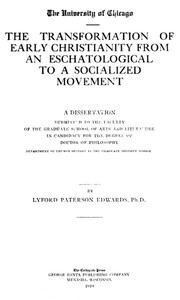
The Transformation of Early Christianity from an Eschatological to a Socialized…
Let's be honest, a book with a title like The Transformation of Early Christianity from an Eschatological to a Socialized Movement sounds like it belongs on a dusty shelf in a university library. But stick with me, because Edwards has written something much more relatable than the title suggests. He's telling the story of a community figuring out how to survive when its core expectation—the imminent end of the world—fails to happen.
The Story
Edwards doesn't focus on famous apostles or dramatic persecutions. Instead, he looks at the everyday challenges of the second and third generations of Christians. The first believers thought Jesus would return any day. They lived with that intense, urgent hope. But as time went on, that hope started to feel distant. People had kids, built homes, and died of old age. The community had to answer tough questions: How do we raise children in a faith about the world ending? How do we handle money and property? What rules should we live by if we're going to be here for a while?
The book tracks how answering these practical questions changed everything. To ensure their survival, Christians began organizing more formally, creating clearer leadership structures and standardizing beliefs. They shifted focus from preparing for the end of the world to building a stable community within it. The faith became less about waiting and more about living.
Why You Should Read It
What I love about this book is how human it makes history. It's easy to think of major religious changes as being decided by councils and creeds. Edwards shows us that a lot of it was just people solving problems. It's the story of a radical movement getting comfortable, for better or worse. You see the tension between holding onto a passionate, original vision and adapting to real-world pressures so you don't fade away. It makes you think about how any group—a club, a company, a movement—changes when its initial reason for being meets the test of time.
Final Verdict
This isn't a light beach read, but it's surprisingly accessible for anyone curious about history, religion, or how ideas evolve. It's perfect for the reader who enjoys authors like Bart Ehrman or Karen Armstrong, but wants to look at a very specific, crucial turning point. If you've ever wondered, 'How did we get from there to here?' about Christianity, this book provides a compelling and thoughtful answer. Just be ready to explain that long title to your friends!
Legal analysis indicates this work is in the public domain. Preserving history for future generations.






Susan Davis
1 year agoUsed this for my thesis, incredibly useful.