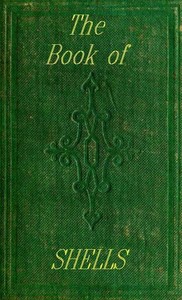
The volume opens by declaring its adherence to Lamarck's system for invertebrate animals, a deliberate methodological choice that shapes every subsequent description. The authorial voice is notably cautious, acknowledging that 'many deviations from certain parts of his system have taken place' while still asserting Lamarck's arrangement as 'unrivalled' for the young naturalist. This tension between established authority and emerging science recurs throughout the text, particularly in the treatment of Cirrhipeda, where the author notes that barnacles were 'a stumbling-block' for systematists before their true affinity with Crustacea was discovered.
Diction and the Naturalist's Vocabulary
The author employs a precise, technical lexicon that reflects the period's natural history discourse. Terms such as 'pedunculata,' 'sedentaria,' and 'tentacula' are used consistently, and the text frequently glosses Latin roots: 'Cirrhipeda being derived from two Latin words,—cirrhus, hair, and pes, the foot.' This pedagogical habit extends to descriptive passages, where shells are characterized by their 'porphyry' hue or 'caniculated' form. The author also deploys vivid, almost literary language when describing ecological interactions, as when the ship-worm's burrowing is said to 'pierce' piles 'in all directions' and threaten 'immense tracts of country.' Such diction oscillates between clinical taxonomy and dramatic narrative, revealing an authorial desire both to instruct and to astonish.
Structural Choices: Order and Hierarchy
The book's organization follows a clear hierarchical structure: classes, orders, genera, and species are presented in sequence, with each entry typically including a Latin name, a common name, and a descriptive paragraph. However, the author occasionally disrupts this pattern to insert historical or anecdotal material. For instance, the entry on the Smooth Barnacle includes a lengthy discussion of the 'curious popular error' linking barnacles to geese, complete with a quotation from Sir Robert Moray. This digression serves both to correct a misconception and to illustrate the persistence of folk belief. Similarly, the treatment of the Cirrhipeda class includes a meta-commentary on taxonomic history, explaining how Lamarck himself changed his mind about their placement. These structural interruptions suggest that the author valued narrative context as much as systematic order.
Recurring Details: Habitat and Human Impact
Throughout the excerpts, the author repeatedly emphasizes the physical environments where shells are found and the ways human structures interact with these organisms. The description of the ship-worm (Teredo) is particularly detailed, noting how its burrowing endangered Dutch dykes: 'these piles were once discovered pierced in all directions by this destructive worm, to such an extent as to endanger their safety.' The barnacle entry mentions attachment to 'ships' bottoms' and 'pieces of timber,' while the acorn-shell is said to fix itself 'directly to the rock.' These recurring references to human-made or human-affected substrates—dykes, ships, piles—ground the natural history in practical concerns, reflecting the volume's likely audience of curious laypeople and young readers who might encounter shells in coastal or commercial contexts.
Voice and the Reader's Role
The authorial voice is consistently instructive but not condescending, addressing the reader as a 'young naturalist' who can 'readily add to the information' by consulting 'more recent authors.' This framing positions the book as a starting point rather than a definitive reference. The author also uses inclusive language, as when describing the barnacle goose myth: 'One reason of the continuance of this error in several Roman Catholic countries, is the permission granted by the priest to its members, to eat this goose on fish-days.' Such remarks reveal a Protestant, British perspective that may color the reader's understanding of foreign practices. The overall tone is one of measured authority, occasionally enlivened by wonder at the 'singular formation' of creatures that 'have often proved a stumbling-block' to naturalists.
Readers approaching this 1837 volume should attend to the interplay between systematic description and anecdotal digression. The author's commitment to Lamarck's framework provides a coherent backbone, but the most memorable passages often arise from the margins—where a barnacle's supposed link to geese is debunked, or a ship-worm's destruction of dykes is recounted. These moments reveal the period's natural history as a blend of observation, error correction, and cultural commentary. The book rewards those who read not only for taxonomic facts but for the worldview embedded in its diction and structure.
There’s something comforting about an old book that assumes you’ll sit quietly with its details—shells, strata, the patient weight of classification. I found that same unhurried feeling wandering through Florida Caverns State Park Marianna, Florida — Text and Context, where the limestone remembers what the 1837 naturalists could only guess at. Both leave me holding a small, quiet wonder that refuses to be hurried.