About 198 minutes
The Principal Species of Wood: Their Characteristic Properties First Edition — Story, Setting & Ideas
Gardening
45,498 recorded words. 1 minutes difference from this book's estimate.
View Gutenberg source #45032
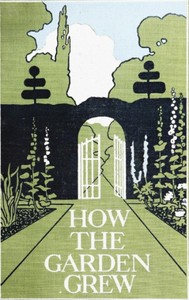
How the Garden Grew — A Closer Reading can be approached with a clearer sense of reading commitment from its source measurements: 45,154 words, 3 hr 17 min estimated reading time, and 7 detected text sections.
The text analysis averages about 16.9 words per sentence, while the detected sections provide another way to judge how the source is divided.
Project Gutenberg metadata also associates the work with “Gardening,” connecting these edition facts with the source record’s subject description.
Explore this collection
These alternatives are selected using recorded categories and estimated reading time.
About 198 minutes
Gardening
45,498 recorded words. 1 minutes difference from this book's estimate.
View Gutenberg source #45032About 206 minutes
Gardening
47,237 recorded words. 9 minutes difference from this book's estimate.
View Gutenberg source #45084About 184 minutes
Gardening
42,215 recorded words. 13 minutes difference from this book's estimate.
View Gutenberg source #76047Search stored excerpts and compare books → Choose by your preferences →
Choices use stored catalog measurements. Estimates vary with reading speed. A shared category is a catalog label, not a claim that two books have the same argument or literary quality.
Search reads excerpt text stored with this catalog and links to its associated Gutenberg record. The connection is stored in the site database; this tool does not recheck that every excerpt is word-for-word identical to that external record. Excerpt search does not cover every chapter and does not verify historical publication dates.
Catalog snapshot checked: 2026-09-25. Coverage: 98 public books, 98 available source excerpts.
Read the complete public-domain text at its original source.
Read on Project GutenbergMaud Maryon's How the Garden Grew opens with a narrator who admits she 'have not had charge of my garden very long' and who immediately establishes a voice of dry, self-aware complaint. The book is structured by seasons—Winter, Spring, Summer, Autumn—each section charting a phase of the garden's development and the narrator's growing confidence. The prose moves between brisk dialogue and reflective passages, with the narrator's sharp observations about the gardener Griggs and the well-meaning but impractical 'Reverence' providing a consistent thread of humor and tension.
The narrator's tone is established early through her blunt critique of the existing flower garden: 'nothing but some semi-red geraniums and some poverty-stricken calceolarias and scraggy lobelias.' This is not a passive observer but someone who declares the state of the garden 'disgraceful' and who argues with the Reverence about the value of flowers versus vegetables. Her voice carries authority even when she admits uncertainty—'I did not know, at least, not what I would do, only what I would not'—and she uses that authority to override the Reverence's chaotic color scheme. The dialogue is quick and natural, with the narrator often getting the last word, as when she dismisses his plan as a 'higgledy-piggledy assembly.'
The narrative pace quickens during the planning and planting scenes, where the narrator's will clashes with the Reverence's enthusiasm. In one extended exchange, the Reverence proposes a bed of 'Red, then yellow, then white' flowers, and the narrator's indignation is palpable: 'Good heavens, sir! Imagine such a higgledy-piggledy assembly.' The Young Man, caught between them, hedges feebly. The narrator's eventual solution—a monochrome scheme of 'all yellow'—is presented as a revelation, and the pace slows as she describes the plants: 'the big, rather clumsy African, but with handsome colouring, and the smaller, neater, darker French variety.' This shift from argument to detailed planning mirrors the garden's own rhythm of conflict and growth.
The book's division into four seasons gives a natural arc to the narrative. The Winter section establishes the problem and the narrator's determination; Spring brings the planning and planting; Summer and Autumn presumably show results. Within the excerpts, the pace varies from the rapid-fire dialogue of the color-scheme debate to the more measured descriptions of plants: 'They were all bushy plants, all hardy, and would bloom steadily through the summer and autumn.' The narrator's voice also modulates—from exasperated ('I was in no laughing mood') to satisfied ('Eventually I was proud of those beds'). This seasonal structure allows the reader to experience the garden's progress alongside the narrator's changing moods, with the prose slowing to observe details like 'the dark round balls of reds, browns, blues, with tiny white pin-points.'
Readers attentive to voice will find the narrator's self-deprecating humor and sharp judgments a consistent pleasure. The book rewards those who enjoy watching a character grow into her role as decisively as the garden grows into its beds. Pay attention to how the narrator's confidence shifts across the seasons, and how the minor characters—Griggs, the Reverence, the Young Man—serve as foils for her developing authority.
That gardening memoir’s stubborn, witty narrator reminded me how much patience hides inside apparent failure. Her weedy borders and color arguments felt like old friends. It made me think of another quiet book, Identifying Hardwoods Growing on Pine Sites — Background and Themes, where the landscape’s forgotten persistence speaks just as softly. Both leave you staring at ordinary ground, wondering what’s really growing there.
Use these questions to collect your thoughts before moving on.