About 341 minutes
Our sentimental garden — Edition Insights
Gardening
78,342 recorded words. 19 minutes difference from this book's estimate.
View Gutenberg source #51779
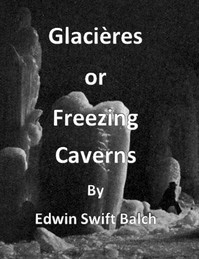
The catalog record for Glacières; or, Freezing Caverns — Context and Discussion provides practical reading context through 82,714 words, 6 hr estimated reading time, and 12 detected text sections.
The text analysis averages about 17.1 words per sentence, while the detected sections provide another way to judge how the source is divided.
Project Gutenberg metadata also associates the work with “Caves,” connecting these edition facts with the source record’s subject description.
Explore this collection
These alternatives are selected using recorded categories and estimated reading time.
About 341 minutes
Gardening
78,342 recorded words. 19 minutes difference from this book's estimate.
View Gutenberg source #51779About 412 minutes
Gardening
94,753 recorded words. 52 minutes difference from this book's estimate.
View Gutenberg source #40190About 423 minutes
Gardening
97,061 recorded words. 63 minutes difference from this book's estimate.
View Gutenberg source #19905Search stored excerpts and compare books → Choose by your preferences →
Choices use stored catalog measurements. Estimates vary with reading speed. A shared category is a catalog label, not a claim that two books have the same argument or literary quality.
Search reads excerpt text stored with this catalog and links to its associated Gutenberg record. The connection is stored in the site database; this tool does not recheck that every excerpt is word-for-word identical to that external record. Excerpt search does not cover every chapter and does not verify historical publication dates.
Catalog snapshot checked: 2026-09-25. Coverage: 98 public books, 98 available source excerpts.
Read the complete public-domain text at its original source.
Read on Project GutenbergEdwin Swift Balch’s Glacières; or, Freezing Caverns (1900) opens not with a thesis but with a frontispiece of an “Ice Slope and Basin, Kolowratshöhle,” immediately grounding the reader in the physical reality of subterranean ice. The book is a methodical survey of caves where ice persists year-round, drawing on Balch’s own explorations and a wide network of correspondents. His prose is matter-of-fact, often citing measurements in meters and centimeters, and he treats each cave as a distinct natural phenomenon rather than a marvel. The dedication to his mother and the extensive list of acknowledgments signal a collaborative, empirical approach.
Balch organizes his material into five parts: experiences in glacières, causes of subterranean ice, a list of glacières, opinions about them, and a list of authors. The core is the list, which runs from European caves like the Kolowratshöhle and the Schafloch to American sites such as the “Freezing Lava Caves, Washington” and the “Ice Spring in the Rocky Mountains.” Each entry follows a consistent pattern: location, dimensions, ice characteristics, and often a citation. For example, the Washington lava caves are described as “in basalt” with “a strong draught flows into the cave in summer through the open arm.” This uniformity allows comparison across continents.
Balch’s language is deliberately unadorned. He writes of “ice stalactites and stalagmites: one a superb, transparent hillock, which rises nearly to the roof, is called the Iceberg.” The word “superb” is rare; most descriptions are quantitative: “about 6 meters below the entrance,” “some 15 meters in depth.” He notes that melted ice leaves “a residuum of fine dust, which while fresh emits a pungent odor,” a sensory detail that stands out amid the measurements. This restraint gives the book a scientific credibility, but also a dry, catalog-like rhythm. The voice is that of a geographer compiling evidence, not a storyteller.
Balch frequently incorporates newspaper accounts and letters from local informants. For the Modoc County lava caves, he quotes a Dispatch article from Frankford, Pennsylvania, describing “an immense field of lava covered with a beautiful forest of conifers.” For the Mount Adams caves, he cites the Philadelphia Ledger and a Mr. Frank McFarland, who “broke off and took to camp chunks of ice weighing 100 pounds.” These voices add a vernacular layer, contrasting with Balch’s own measured tone. They also reveal how local knowledge shaped his understanding, though he never cedes authority to them.
The excerpts cover sites from Kotzebue Sound, Alaska, to the Columbia River basin, to the Alps. Balch includes a note on “Subterranean Ice Sheet on Kotzebue Sound” from Otto von Kotzebue’s 1821 voyage, describing ice “more than 30 meters thick” covered with soil and animal remains. This breadth suggests a global survey, but the excerpts are too fragmentary to reveal Balch’s full argument about causation. He clearly values firsthand accounts—his own and others’—but the book’s structure implies a taxonomic rather than narrative goal. The reader should expect a reference work, not a continuous travelogue.
Balch’s Glacières rewards a patient, comparative reading. Pay attention to the recurring details: the direction of drafts, the shape of ice formations, the presence of dust or salt. These small observations accumulate into a picture of how ice persists underground. The book is best approached as a field guide to a forgotten corner of natural history, one where the author’s voice is less important than the phenomena he records.
I’ve often returned to my old volume on freezing caverns, tracing those silent blue galleries carved in stone, and it reminds me of another patient catalogue on my shelf—The Book of Shells Containing the Classes Mollusca, Conchifera, Cirrhipeda, Annulata, and Crustacea — Edition Insights. Both speak of hidden chambers, of forms waiting quietly for a patient eye to note their exact geometry.
Capture what you thought, learned, and would like to remember.