About 226 minutes
A Garden Diary, September 1899—September 1900 — Story, Setting & Ideas
Gardening
51,763 recorded words. 1 minutes difference from this book's estimate.
View Gutenberg source #51477
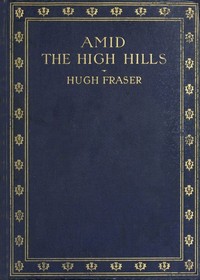
For Amid the High Hills — Inside the Classic, the stored edition analysis reports 52,110 words, 3 hr 47 min estimated reading time, and 25 detected text sections.
The text analysis averages about 24.0 words per sentence, while the detected sections provide another way to judge how the source is divided.
Project Gutenberg metadata also associates the work with “Fishing -- Scotland,” connecting these edition facts with the source record’s subject description.
Explore this collection
These alternatives are selected using recorded categories and estimated reading time.
About 226 minutes
Gardening
51,763 recorded words. 1 minutes difference from this book's estimate.
View Gutenberg source #51477About 226 minutes
Gardening
51,812 recorded words. 1 minutes difference from this book's estimate.
View Gutenberg source #76043About 223 minutes
Gardening
51,243 recorded words. 4 minutes difference from this book's estimate.
View Gutenberg source #44738Search stored excerpts and compare books → Choose by your preferences →
Choices use stored catalog measurements. Estimates vary with reading speed. A shared category is a catalog label, not a claim that two books have the same argument or literary quality.
Search reads excerpt text stored with this catalog and links to its associated Gutenberg record. The connection is stored in the site database; this tool does not recheck that every excerpt is word-for-word identical to that external record. Excerpt search does not cover every chapter and does not verify historical publication dates.
Catalog snapshot checked: 2026-09-25. Coverage: 98 public books, 98 available source excerpts.
Read the complete public-domain text at its original source.
Read on Project GutenbergSir Hugh Fraser's Amid the High Hills collects articles originally published in journals such as The Field and Country Life, along with previously unpublished pieces. The excerpts show a writer deeply attentive to the physical details of fishing and stalking—the weight of a salmon, the duration of a fight, the weather conditions. Fraser does not romanticize the landscape; instead, he records the actions of his companions and the behavior of fish and game with a reporter's precision. The book is organized as a series of discrete episodes, each anchored in a specific time and place in the Scottish Highlands.
One excerpt recounts a salmon fishing episode in which Fraser hooks a fish that fights for four hours and six minutes, jumping seventeen times. His brother notes the duration by observing a peat cart that departs and returns during the struggle. This attention to elapsed time and external markers is characteristic: Fraser treats each catch as a measurable event. The narrative contrasts this long battle with a second fish hooked later the same evening, which is gaffed in under four minutes. The difference is attributed to the skill of the gillie, Sandy, and the fish's failure to run or jump. Fraser's prose emphasizes the unpredictability of the sport and the importance of quick, coordinated action between angler and boatman.
Throughout the excerpts, the gillie Sandy emerges as a central figure. Fraser describes him seizing the gaff, leaping from the boat, and landing the fish with a 'lightning-like movement.' After the first salmon is killed, Fraser offers whisky with the words, 'if any man ever deserved a drop of good whisky, you do.' Sandy replies with the Gaelic toast 'Shlàinte.' The partnership between Fraser and his companion is presented as essential to success; the narrative gives Sandy agency and skill, not merely as a helper but as a decisive actor. The book's dedication also acknowledges 'kinsmen and friends' who shared days on hill, loch, and river, reinforcing the social dimension of these pursuits.
The Project Gutenberg catalog lists subjects including 'Fishing -- Scotland,' 'Hunting -- Scotland,' 'Salmon fishing -- Great Britain,' and 'Spanish American literature -- History and criticism.' The last is clearly an error: the excerpts contain no reference to Spanish American literature. The book is entirely focused on Scottish field sports and natural history. The secondary topics 'general-literature' and 'zoology' are more apt, as Fraser includes observations on bird flight and animal behavior. Readers should note that the catalog record is partially inaccurate; the work is a collection of sporting articles, not a work of literary criticism.
Fraser's writing rewards readers interested in the practical craft of fishing and stalking rather than scenic description. The excerpts show a methodical observer who values patience, skill, and the companionship of his gillie. Because the text is a compilation of separate articles, it can be read in any order; each chapter stands alone. Those seeking a continuous narrative will not find one, but the consistency of Fraser's voice and his attention to the rhythms of the natural world give the collection coherence.
Sir Hugh Fraser knew the patience of waiting at a salmon pool, that quiet watchfulness where time slows and skill becomes habit. I recall that same steady companionship in The Mule: A Treatise on the Breeding, Training, and Uses to Which He May Be Put — Themes and Context, a book that understands another kind of stubborn, faithful labor. Both honor the unhurried partnership between patient hands and willing creatures.
Capture what you thought, learned, and would like to remember.