
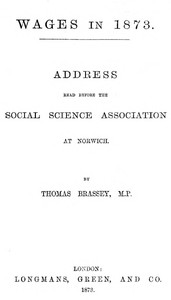
Wages in 1873: Address read before the Social Science Association at Norwich
Let's set the scene: Norwich, England, 1873. The Industrial Revolution is in full swing, factories are booming, and debates about poverty and worker pay are everywhere. Into this steps Thomas Brassey, the Earl of Brassey. He wasn't just a nobleman; he was one of the greatest railway contractors in history, responsible for projects from the UK to India and Australia. He managed a global workforce.
The Story
This isn't a story with characters and a plot twist. It's the text of a speech Brassey gave to the Social Science Association. His main point is straightforward but controversial for the time: high wages are good. Not just good for workers, but essential for a healthy economy and successful businesses. He argues against the common fear that paying more will ruin profits. Instead, he uses his own vast experience to say that well-paid workers are more productive, more skilled, and create less waste. He talks about how higher wages lead to better living standards, which then creates more demand for goods, helping the whole economy grow. It's a direct, evidence-based case for a 'virtuous circle' of pay and prosperity.
Why You Should Read It
Reading this is a trip. You keep forgetting it's from 1873. Brassey’s voice is practical, not preachy. He’s not a socialist reformer; he’s a capitalist making a hard-nosed business argument. When he details how French masons, paid better than their English counterparts, did superior work faster, it feels like a modern case study. It shatters the cartoon villain image of the 19th-century industrialist. The real insight is seeing how these debates—about fair compensation, the link between pay and productivity, and the role of business in society—are not new at all. We're still having them. It gives incredible historical depth to today's headlines.
Final Verdict
Perfect for history buffs who like primary sources, business readers curious about economic history, or anyone who enjoys seeing where today's ideas came from. It’s short, clear, and surprisingly relatable. Don't expect a thrilling narrative, but do expect to have your assumptions about the Victorian era challenged. You'll come away thinking, "Huh, so they were talking about this back then too." It's a powerful reminder that good ideas often have very old roots.
This content is free to share and distribute. Preserving history for future generations.
Charles Scott
5 months agoNot bad at all.
Christopher Taylor
5 months agoCitation worthy content.





Steven Moore
11 months agoTo be perfectly clear, the emotional weight of the story is balanced perfectly. A valuable addition to my collection.