
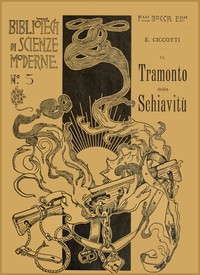
Il tramonto della schiavitù nel mondo antico by Ettore Ciccotti
Ettore Ciccotti's Il tramonto della schiavitù nel mondo antico (The Sunset of Slavery in the Ancient World) tackles a deceptively simple question: how and why did slavery, a cornerstone of societies like Rome, gradually decline? Written in the early 20th century, Ciccotti's work is a bold argument against the idea that slavery ended primarily due to moral awakening or religious doctrine.
The Story
Ciccotti guides us through the late Roman Empire, but instead of focusing on barbarian invasions or famous emperors, he turns our attention to the fields, workshops, and ledgers. He paints a picture of a system in crisis. Large slave-run estates (latifundia) were becoming inefficient and unprofitable. The cost of acquiring and maintaining slaves was high, and they had little incentive to work productively. Meanwhile, a new class of small farmers and tenant laborers (coloni) began to emerge. These free workers, tied to the land but not owned as property, proved to be a more stable and cost-effective labor force for a struggling empire. Ciccotti's "plot" is the slow, unstoppable shift in economic logic, where slavery simply stopped making sense.
Why You Should Read It
What makes this book so gripping is its focus on the why behind the change. It’s empowering to see history through the lens of everyday economic reality. Ciccotti suggests that profound social change often comes from the ground up, from practical necessity, long before it's celebrated in law or philosophy. Reading it, you get a real sense of the ancient economy as a living, breathing entity with its own pressures and breaking points. It challenges the top-down narrative of history and makes you think about the invisible forces that shape our world.
Final Verdict
This is a perfect pick for anyone who loves history but is tired of the same old stories of kings and conquests. It's for the reader who enjoys big ideas and connecting economic principles to human stories. While it's an academic work at its core, Ciccotti's clear argument makes it accessible to a dedicated general reader with an interest in Rome, economic history, or the mechanics of social change. Be prepared for a thought-provoking read that might just change how you view the end of one of humanity's oldest institutions.
This work has been identified as being free of known copyright restrictions. Enjoy reading and sharing without restrictions.
William Walker
4 months agoThanks for the recommendation.
James Scott
10 months agoFive stars!
Richard Lopez
1 year agoSolid story.
Donald Flores
1 year agoHigh quality edition, very readable.

James Jackson
1 year agoThis was exactly the kind of deep dive I was searching for, the bibliography and references suggest a high level of research and authority. A solid investment for anyone's personal development.