About 32 minutes
Cottontail Rabbits in Relation to Trees and Farm Crops — Text and Context
Plants Soil
7,186 recorded words. 7 minutes difference from this book's estimate.
View Gutenberg source #34446
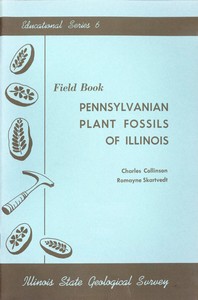
This digital edition of Field Book: Pennsylvanian Plant Fossils of Illinois — Story, Setting & Ideas is described by source-level measurements including 8,910 words, 39 min estimated reading time, and 2 detected text sections.
The text analysis averages about 19.7 words per sentence, while the detected sections provide another way to judge how the source is divided.
Project Gutenberg metadata also associates the work with “Paleobotany -- Illinois,” connecting these edition facts with the source record’s subject description.
Explore this collection
These alternatives are selected using recorded categories and estimated reading time.
About 32 minutes
Plants Soil
7,186 recorded words. 7 minutes difference from this book's estimate.
View Gutenberg source #34446About 103 minutes
Plants Soil
23,474 recorded words. 64 minutes difference from this book's estimate.
View Gutenberg source #25905About 122 minutes
Plants Soil
27,991 recorded words. 83 minutes difference from this book's estimate.
View Gutenberg source #11365Search stored excerpts and compare books → Choose by your preferences →
Choices use stored catalog measurements. Estimates vary with reading speed. A shared category is a catalog label, not a claim that two books have the same argument or literary quality.
Search reads excerpt text stored with this catalog and links to its associated Gutenberg record. The connection is stored in the site database; this tool does not recheck that every excerpt is word-for-word identical to that external record. Excerpt search does not cover every chapter and does not verify historical publication dates.
Catalog snapshot checked: 2026-09-25. Coverage: 98 public books, 98 available source excerpts.
Read the complete public-domain text at its original source.
Read on Project GutenbergThe book opens with a time chart that lists 19 numbered plant forms, from Foerstia to Campsis, pairing extinct genera with modern relatives such as Equisetum and Ginkgo biloba. This visual framework immediately establishes a structural pattern: each entry is a compressed vignette that links a fossil name to a living counterpart, often with a note on survival or extinction. The chart is not merely decorative; it functions as a key that the reader will revisit when encountering fossil names later in the text.
The guide then shifts abruptly from this global time scale to a granular, county-by-county survey of Illinois collecting sites. The movement is from the abstract to the concrete, from the deep past to the present-day landscape. Recurring images—ironstone concretions, shale overlying coal beds, spoil heaps, and stream cuts—anchor the reader in a specific geography. The authors repeatedly mention the Mazon Creek area and its distinctive concretions, creating a touchstone that ties the state's fossil record together.
The time chart is the book's most deliberate structural device. It lists 19 entries, each with a number, a scientific name, and a brief note. For example, entry 13, Baiera, is described as a fossil leaf genus of ginkgo, whose only living representative, Ginkgo biloba, was “saved from extinction by careful cultivation in China.” The chart does not simply catalog; it tells mini-narratives of survival and loss. The inclusion of modern genera like Equisetum and Pinus alongside extinct ones like Sigillaria and Williamsonia creates a visual timeline of continuity and change. This chart is referenced implicitly throughout the book, as the same plant names reappear in the locality descriptions. The reader is expected to flip back to the chart to connect a fossil found in a specific county to its broader evolutionary context.
Three physical features recur with notable frequency: ironstone concretions, shales overlying coal beds, and spoil heaps from mines. The Mazon Creek area is introduced early as a classic locality where “ironstone concretions” yield well-preserved fossils. This image is echoed later in descriptions of Vermilion County, where fossils occur “in concretions much like those from Mazon Creek.” The phrase “shale overlying the … Coal” appears repeatedly, as in the Colchester (No. 2) Coal and the Herrin (No. 6) Coal. Spoil heaps are mentioned as accessible collecting sites in Saline County and elsewhere. These recurring details give the book a tactile quality: the reader is constantly reminded of the physical matrix in which fossils are embedded. The repetition also reinforces the idea that certain geological conditions are reliable indicators of fossil presence.
The book’s structure moves from broad overview to fine-grained local detail. After the time chart and a brief foreword, the text launches into a county-by-county survey of Illinois. Each county entry follows a similar pattern: name the county, mention a specific outcrop or mine, describe the fossil-bearing rock (often shale or concretion), and note which plant species have been found. For instance, the entry for Lawrence County mentions “coal balls” that preserve cellular structures. The entry for Saline County lists multiple coals—Murphysboro, Delwood, Willis, Reynoldsburg, Battery Rock—and directs the reader to “mine dumps” and “outcrops.” This repetitive structure is not monotonous; it trains the reader to expect certain kinds of information and to compare localities. The book ends with a section titled “Suggestions for Collecting,” which returns to general advice, creating a circular movement from overview to specifics and back to general principles.
Although the excerpts do not include the plates themselves, the text repeatedly references them, indicating that illustrations are integral to the book’s structure. Plate 4, for example, is described as containing Sphenopteris, Linopteris, Neuropteris, and other genera, each with a magnification factor (e.g., ⅗×). Plate 5 similarly lists reproductive structures like Codonotheca and seeds like Samaropsis. The captions serve as a visual index that parallels the time chart. The reader is expected to consult these plates while reading the locality descriptions. The illustrations by Marie E. Litterer are not merely decorative; they are a key part of the identification process. The book’s structure thus integrates text and image, with the plates providing a visual counterpart to the verbal descriptions of fossil forms and their occurrences.
The book’s value lies in its systematic approach: it provides a clear framework for understanding where and how Pennsylvanian plant fossils occur in Illinois, without overpromising on identification. Readers should use the time chart and plates as constant references while exploring the county entries. The recurring images of concretions and shales will help them recognize promising sites. This is a practical field companion, not a comprehensive treatise, and its structure rewards active, on-site use.
That gray afternoon, I kept returning to the coal ball photographs in Field Book, the way their roundness suggested something whole yet broken open. Hours vanished into Mazon Creek’s leaf shapes. Later, restless, I picked up another volume, and its quiet passages about cultivated soil felt like the same patient turning-over of earth. The Home Acre — Inside the Classic held that identical stillness, a gentle settling into patience.
Use these questions to collect your thoughts before moving on.